By Joe Maier · November 12, 2026
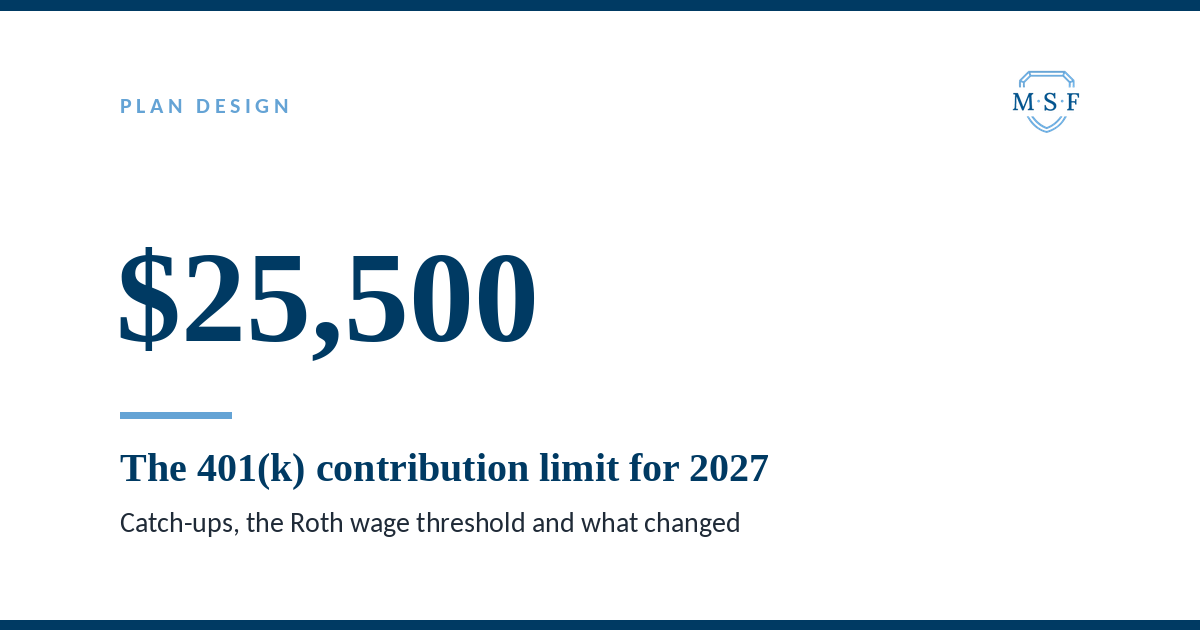
For 2027, employees can defer up to $25,500 into a 401(k), $1,000 more than in 2026. The age 50 catch-up rises to $8,500, and the IRA limit stays at $7,500.
For 2027, an employee can defer up to $25,500 of pay into a 401(k), 403(b) or governmental 457 plan, up from $24,500 in 2026. Employees age 50 and older can add a catch-up of $8,500, for a total of $34,000. The IRS announced the new figures on November 12, 2026.¹ ²
Not every limit moved. The IRA contribution limit stays at $7,500 and the IRA catch-up stays at $1,100.¹
The main plan limits, side by side:²
Employees who turn 60, 61, 62 or 63 during 2027 can use the higher catch-up of $11,750 instead of $8,500, if the plan offers it. That puts their total at $37,250. The higher catch-up came from SECURE 2.0, and plans can choose whether to include it.² ³
Since 2026, catch-ups for higher earners must go in as Roth. For 2027, that applies to employees whose 2026 FICA wages from the employer were more than $155,000.² ³ A plan with no Roth option cannot accept catch-ups from those employees at all, so the Roth feature matters more for a plan with several higher earners.
Most plan documents pick up the new limits automatically. The work is in payroll and in a few plan settings:
The highly compensated employee threshold is used in nondiscrimination testing. Testing looks back a year, so the $170,000 figure generally applies to 2027 pay when the plan identifies highly compensated employees for 2028.
Higher limits help employees who can save more, and they help owners and higher earners most, since they are the most likely to reach the cap. They do nothing for an employee who is not contributing at all. If a plan's average deferral rate is low, the limit is not what holds savings back; enrollment, the default rate and the match are.
If you would like a second set of eyes on how your plan and payroll handle the 2027 limits, start a conversation.
¹ Internal Revenue Service, “401(k) limit increases to $25,500 for 2027, IRA limit remains $7,500,” IR-2026-136, November 12, 2026.
² Internal Revenue Service, Notice 2026-66, 2027 Amounts Relating to Retirement Plans and IRAs, as Adjusted for Changes in Cost-of-Living.
³ SECURE 2.0 Act of 2022, Sections 109 and 603; Internal Revenue Code Section 414(v).
This information was developed as a general guide to educate plan sponsors, but is not intended as authoritative guidance or tax or legal advice. Each plan has unique requirements, and you should consult your attorney or tax advisor for guidance on your specific situation. In no way does advisor assure that, by using the information provided, plan sponsor will be in compliance with ERISA regulations.